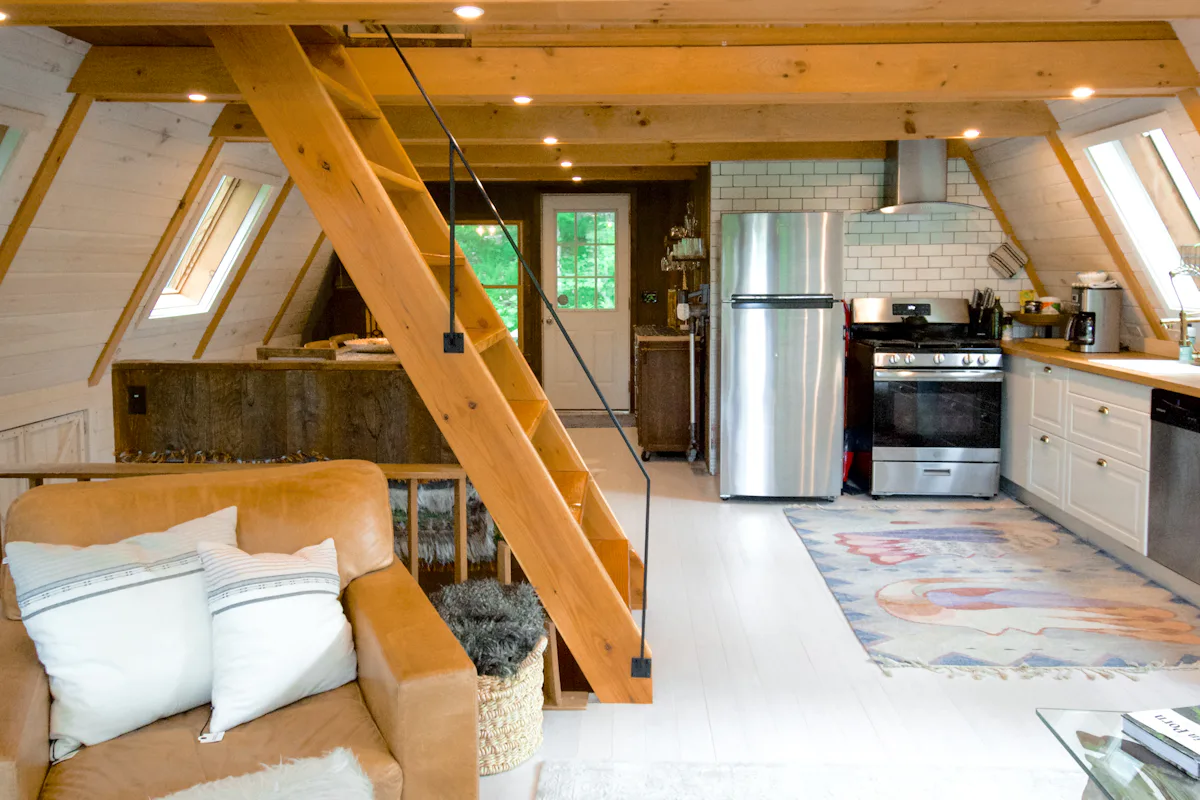
An interior ADU is an independent living unit created inside the main house. Nevada's AB 396 defines an ADU as independent living space on the same lot, whether attached, detached or within the primary residence, as of October 2026. Basements are uncommon in valley homes, so interior units are usually built from existing rooms.
Which homes suit an interior ADU?
- Homes with a ground-floor suite that already has a bathroom.
- Two-story homes where part of one floor can be closed off.
- Homes with an existing casita-style room off the courtyard or entry.
What has to change inside?
- A separate entrance that does not pass through the main living space.
- Kitchen facilities. AB 396 defines these as a sink, refrigerator and a significant cooking appliance, and bars covered ordinances from prohibiting them.
- Separation. Fire-rated walls and doors between the units, and sound insulation.
- Cooling. Separate controls, usually a ductless system for the ADU.
Is it cheaper than a detached casita?
Usually, because there is no new foundation or roof. The final number depends on how much plumbing is moved and whether the electrical panel has room. We found no published Las Vegas-specific range for interior units, so we price them after a walk-through.
Do building codes treat it like a commercial building?
No. AB 396 says ADUs must meet applicable building, housing and health and safety codes, but not commercial building codes such as commercial fire sprinkler requirements, as of October 2026.